
What Is Soft Skill?
Soft skills include any skill that can be classified as a personality trait or habit. Whereas hard skills are the tangible and technical skills easily demonstrated by a candidate’s qualifications and specific professional experiences, soft skills is a term used by employers to refer to the more intangible and non-technical abilities that are sought from candidates.
Soft skills are sometimes referred to as transferable skills or professional skills. As this term implies, these are skills that are less specialised, less rooted in specific vocations, and more aligned with the general disposition and personality of a candidate.
Unlike hard skills that are learned, soft skills are similar to emotions or insights that allow people to “read” others. These are much harder to learn, at least in a traditional classroom. They are also much harder to measure and evaluate.
Soft skills include attitude, communication, creative thinking, work ethic, teamwork, networking, decision making, positivity, time management, motivation, flexibility, problem-solving, critical thinking, and conflict resolution.
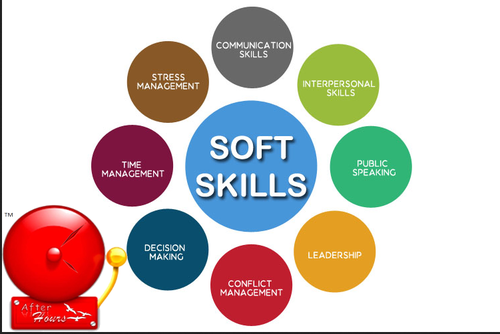
For the 8 key soft skills are:
Why are soft skills important?
Soft skills play an important role in resume writing, interviewing, and finding success in communicating with people at work and in other areas of your life. For example, as you look for jobs, you may find that many employers list specific soft skills on their job posts in the “required” or “desired” sections. A job posting for a Human Resources associate may list “attention to detail” as a desired trait, while a job for a Marketing Specialist could list “leadership” and “great communication skills”.
Soft skills are often transferable across careers and industries. As a result, you may find that you possess many of the required traits even if you don’t match the exact profile in a job description. As you search for jobs, pay special attention to posts calling for candidates with soft skills or traits you possess. Even if the job title isn’t a great fit, you may find that the description makes sense for you. As you progress through the job search process, keep your resume updated to reflect soft skills most relevant to the jobs you’re applying for.
You may also find it helpful to consider how you might showcase your soft skills in an interview. While you can display some skills like good communication, you may consider weaving others into your answers to interview questions. For example, you might talk about your problem-solving skills when answering a question like, “Tell me about a time you overcame an obstacle.” If the employers prompts you to provide references, think of those that can speak to examples that verify your soft skills and other strengths.